

SC declines to recognise ‘Theft’ as deficiency in service by Railways

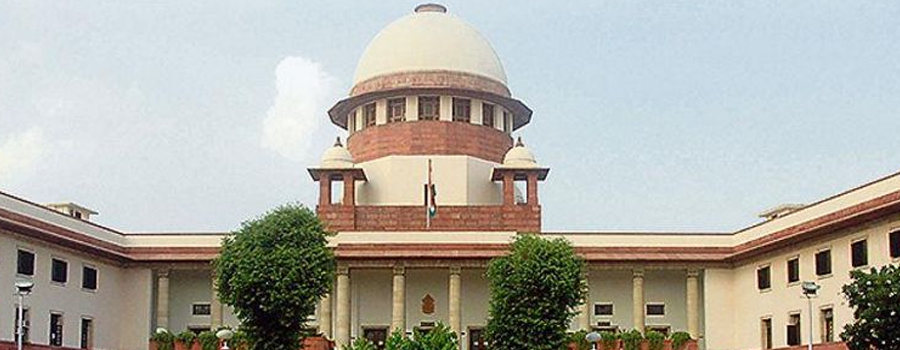
The Supreme Court (SC), in an appeal filed by the Indian Railways against the order of National Consumer forum which had directed the Railways to pay Rs.1 Lakh as compensation on account of theft of money happened during victim’s train journey, noted that theft during a train journey cannot be termed as ‘deficiency in service’ as per the Consumer Protection Act, 1986. The SC further stated that “we fail to understand as to how the theft could be said to be deficiency of service by the Railways when the passenger was not able to safe keep his belongings.”


State Monopolies not excluded from the definition of ‘enterprise’ under Competition Act, 2002: SC

The Supreme Court (SC), holding Coal India Limited (CIL) an enterprise under section 2(h) of the Competition Act, 2002 (Act), observed that State Monopolies, Government Companies and Public Sector Undertakings (PSUs) are not excluded from the definition of ‘enterprise’ under the Act and cannot be allowed to indulge in anti-competitive practices in violation of the Act. The SC, further, noted that while determining dominant position of an enterprise, dominance acquired as a result of the Statute or by virtue of being a Government Company or being a PSU or otherwise is a relevant factor. Therefore, “the lawgiver has evinced its intention to include government companies, public sector companies and bodies acquired under a Statute within the ambit of the Act.”

EC issues “Statement of Objections” to Google over its abusive practices in Ad-tech industry

The European Commission (EC) through its statement of objections has informed Google of its abusive practices in the ad-tech industry. Google’s main source of revenue is through online advertising, in which, it either sells advertising space on its own websites and apps; or intermediates between advertiser and publishers (third party websites). EC preliminary found Google to be dominant in the publisher ad-servers market and ad-buying tools through which, since 2014, it has been abusing its dominant position by favouring its own Ad-Exchange (AdX). According to the EC, this conduct may have foreclosed rival ad-exchanges further reinforcing Google AdX’s role in the ad-tech supply chain and its ability to charge high commission rates.

A transaction is not benami merely because husband paid the consideration to buy property in wife’s name: Calcutta HC

The Calcutta High Court (Calcutta HC), while hearing a partition suit wherein it has been contended that the property in question, brought by husband in his wife’s name, is out of a benami transaction, has held that the “source of money is, no doubt, an important factor but not a decisive one. The intention of the supplier of the consideration money is the vital fact to be proved by the party who asserts benami.”

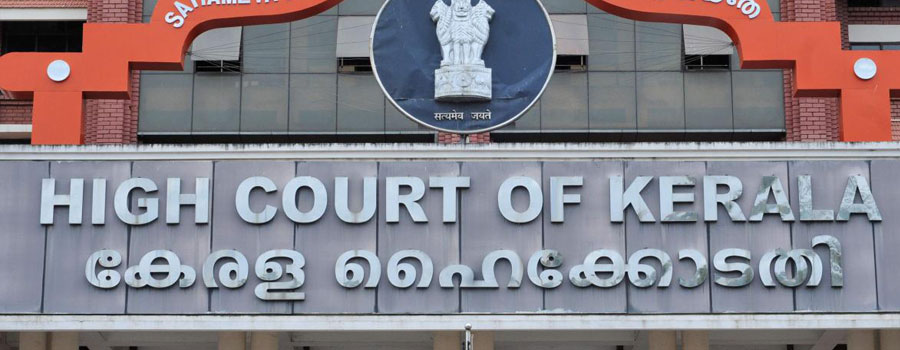
Couple living in live-in relationship by mere agreement cannot seek divorce: Kerala HC

The Kerala High Court (Kerala HC), declining to hear a divorce petition in a live-in relationship case, held that if the parties decide to live together by virtue of an agreement, that by itself will not be recognised as a marriage and, therefore, cannot claim divorce. The Kerala HC stated that “the Law is yet to recognise the live-in relationship as marriage. The Law accords recognition only if the marriage is solemnised in accordance with the personal law or in accordance with secular law like the Special Marriage Act.”

SC stays bike-taxi operations of Rapido & Uber in Delhi

The Supreme Court (SC), opining that licenses are required for the use of vehicles as transport vehicles under the scheme of the Motor Vehicles Act, 1988 and, further, that Motor Vehicle Aggregator Guidelines, 2020 issued by the Central Government can never override a statute, stayed the order passed by Delhi High Court (Delhi HC) allowing bike-taxi operations in Delhi. The Delhi HC had passed an order granting bike-taxi operators, like Rapido and Uber, to operate without aggregator licenses till Delhi Government notifies its policy for the same.

LOCs cannot be issued as a general norm by the bank for its loan defaulters: Calcutta HC

The Calcutta High Court (Calcutta HC) has held that merely because few loan defaulters have defrauded the banks and fled from India, the same cannot be used as a uniform rationale for banks to issue Look out Circulars (LOC) in every case. Apart from causing immediate and irrevocable violation of a person’s fundamental right of movement, LOC also have an inexplicably long shelf-life, as they can only be revoked at the instance of the originator. Thus, the Calcutta HC held that – “The only acceptable logic – albeit with some effort – is that a person may flee the country and not return to repay his/her outstanding loan. This, however, cannot be the rule across the board and a borrower’s credentials and circumstances for making payment must be taken into account.”

No interim relief to Shemaroo in copyright infringement case against T-Series: Bombay HC

The Bombay High Court (Bombay HC) has refused to grant temporary injunction in a copyright infringement suit filed by Shemaroo Entertainment Ltd. against Super Cassettes Industries Ltd. (T-Series). The suit pertains to alleged copyright infringement by T-Series for publishing audio-visuals of film songs on T-Series’ YouTube channel over which Shemaroo holds copyright. However, Bombay HC refused to grant relief “As the plaintiff is found to have failed in making out a prima facie case in its favour, the aspects of grave and irreparable loss being suffered in the absence of temporary injunction and balance of convenience, pale into insignificance.”

Hitachi-Thales’ GTS deal could lead to substantial lessening of competition: CMA

The Competition & Markets Authority (CMA), UK, in its provisional findings report related to the proposed acquisition of Thales’ Ground Transport Systems (GTS) by Hitachi Rail Ltd. (Hitachi) has concluded that the acquisition could lead to substantial lessening of competition in the supply of: i) digital mainline signalling systems in Great Britain & ii) communications-based train control signalling systems in the UK. Further, UK’s railway network is planned for due upgradation, and if, the merger is allowed, it could lead to fewer credible bidders in an already oligopolistic market, which could raise costs, negatively impact digitalisation of the network and likely to reduce competition.