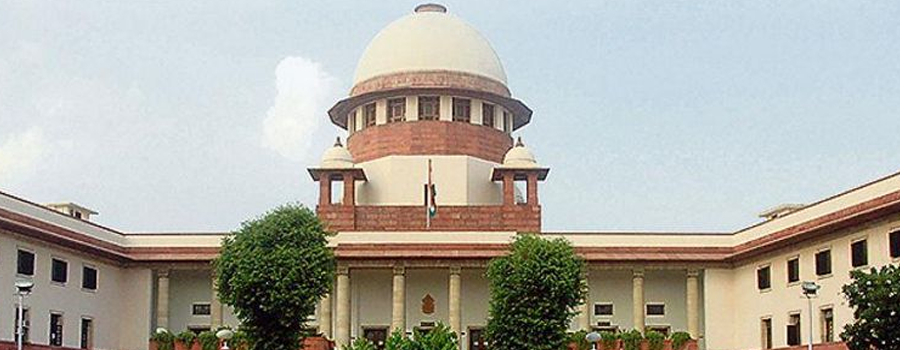
Land Acquisition by Odisha Government Vitiated by Favouritism towards Vedanta University: SC

The Supreme Court (SC) noting that S.44B of Land Acquisition Act, 1984, specifically bars the acquisition for a private company, upheld the order of Odisha High Court (OHC), quashing the land acquisition by Odisha Government for the proposed Vedanta University. The SC further, said that the entire acquisition process was initiated at the instance of a single company (Vedanta Foundation); thus, it is vitiated by mala fides and favourism and is a clear case of non-application of mind.

Being a Single Woman cannot be a ground to Deny Adoption: BHC

The Bombay High Court (BHC), noting prospective parent shall be physically fit, financially sound, mentally alert and highly motivated to adopt a child to provide a good upbringing to it, set aside the order passed by a District Court denying adoption of a girl child. Further, the BHC noted that competent court has rejected the adoption only on the ground that the prospective parent is a single lady and a divorcee, and the comparison made between the prospective parent and the biological mother being a housewife reflects the medieval conservative mindset on the concept of family.

South Korean Anti-Trust Regulator Imposed a Fine of $32 million on Google

South Korean Fair Trade Commission (KFTC) imposed a fine of $32 million on Google LLC (Google) for engaging in anti-competitive practices aimed at competing app hosting platforms. It was alleged that Google prevented game developers from launching their games on rival platforms such as One Store in return for offering its in-app exposure and support in global expansion in order to drive out its rivals. As a result, the market share of One Store fell, while the market share held by Google increased. Therefore, the KFTC imposed fine on Google to ensure fair competition among local players in the market.

“Members of the District Judiciary cannot be Placed in a Sense of Fear”: SC

The Supreme Court (SC) setting aside the order of the Madhya Pradesh High Court (MPHC), denying bail granted by a District Court, observed that “The order of the High Court directing that the appellant be arrested immediately and seeking an explanation from the Second Additional Sessions Judge was wholly disproportionate and was not warranted. Such orders of the High Court produce a chilling effect on the District judiciary.” The SC further observed that bail granted by the District Court was based on factors such as the filing of charge sheet, release of co-accused on bail etc. and that the order of bail did not indicate that wrong principles of law were applied.

DHC Upholds Ban on Flavoured Tobacco, Pan Masala, Gutka in Delhi

The Delhi High Court (DHC) upheld the State Government’s notification prohibiting the manufacture, storage, distribution or sale of scented/flavoured tobacco, pan masala, gutka and similar products in the national capital. The DHC rejected the argument that prohibition was limited to only ‘smokeless tobacco’ and therefore, violative of Art.14. The DHC observed that allowing this submission would amount to “the Court sanctioning the distribution and sale of smokeless tobacco in addition to smoking tobacco”. Further, the right and protection under Art.14 cannot be used as right to manufacture, sell or distribute a harmful substance.

Commissioner of Income Tax can Exercise its Revision Powers over the Assessing Officer’s Orders: SC

The Supreme Court (SC) overruled an order passed by the Bombay High Court, which set aside a direction passed by the Commissioner of Income Tax (CIT) exercising his powers of revision under Section 263 of the Income Tax Act, 1961 (IT Act). SC observed that the scheme of IT Act is to levy and collect tax, and this task is entrusted to the Revenue. If due to an erroneous order of the Assessing officer the revenue is losing tax, lawfully payable by a person, it will certainly be prejudicial to the interests of the Revenue. Therefore, the CIT can exercise his power of revision, under Section 263, to rectify the same.

Forcing Husband to Separate from his Parents & Name-Calling Amounts to Cruelty: CHC

The Calcutta High Court (CHC) upheld the order passed by the Trial Court, annulling marriage between the parties, noting that calling the husband ‘coward’ and ‘unemployed’ amounts to instances of rude behaviour on the part of wife. The CHC further noted that it is a common practice in Indian society for sons to live with their parents even after the marriage. Therefore, there must be some “justifiable reason” for the wife to ask the husband to get separated from his parents, but in absence of any justifiable reason wife’s demand for a separate residence may amount to obstinacy and an act of mental cruelty.

Mere Apprehensions of Prosecutrix Cannot be a Ground for Transfer of Case to a POCSO Court Presided by A Lady Judge: DHC

The Delhi High Court (DHC) dismissing a petition, filed for transfer of a case, observed that mere apprehensions of prosecutrix cannot lead to the transfer of a rape case from a male judge to a special Protection of Children from Sexual Offences Act, 2012 (POCSO) Court presided over by a lady judge, especially when no charge(s) has been levelled under POCSO. The DHC noted that in absence of any directions (judicial or administrative) for a carte blanche mandate; a transfer may potentially create difficulties in administration of justice, allocation and preservation of jurisdictions.