


ACCC fined Airbnb for misleading consumers about the currency of the prices on its platform

The Australian Competition & Consumer Commission (ACCC), has directed Airbnb Ireland UC (Airbnb) to pay $30 million ($15 million as penalty & $15 million as compensation to the affected consumers) for misleading its consumers about the currency of the prices on its accommodation platform. The ACCC noted that between 2018 & 2021, Airbnb made false or misleading representations that the prices on its accommodation platform were in Australian dollars, when in fact for about 70,000 consumers the prices were in US dollars. The ACCC further held that, by paying in US dollars, the affected consumers were charged more than what they expected to pay, and were deprived of a chance to make an informed decision.
Autorité de la concurrence fines Rolex for prohibiting retailers from selling watches online

The French Competition Authority – Autorité de la concurrence (ALC), has imposed a fine of €91,600,000 on Rolex France SAS (Rolex) for engaging in an anti-competitive vertical agreement, with its authorised retailers, by prohibiting them from selling Rolex watches online for more than ten years. According to the ALC, the defence provided by Rolex that the measure has been undertaken by them to combat counterfeiting and parallel trade, was insufficient considering that Rolex’s competitor facing similar risks authorise online selling of their products.

When no limitation period prescribed, then Appeal must be filed within reasonable time: SC

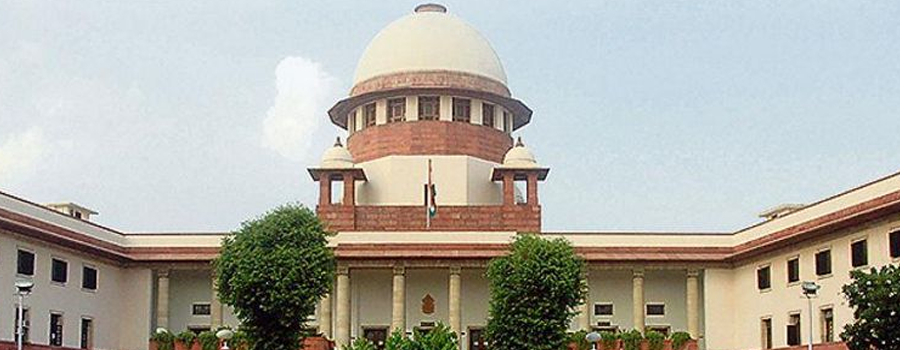
The Supreme Court (SC), while dealing with the issue limitation period for filling an appeal, when no such period has been prescribed, has held that, “…where no limitation stands provided either by specific applicability of the Limitation Act or the special statute governing the dispute, the Court must undertake a holistic assessment of the facts and circumstances of the case to examine the possibility of delay causing prejudice to a party.” The SC further held that, the court’s examination must include the facts and circumstances of the case, conduct of the parties, nature of the proceeding, length of delay, possibility of prejudice being caused, and the scheme of the statute in question, while considering the limitation period and condonation of delay application, if any.

Two Women’s Reservation Bill receives imprimatur of the Lok Sabha

The Lok Sabha has passed The Jammu and Kashmir Reorganisation (Second Amendment) Bill, 2023 and the Government of Union Territories (Amendment) Bill, 2023 providing for reservation of one-third of all elected seats, for women, in the Jammu & Kashmir Legislative Assembly and in the Puducherry Legislative Assembly, respectively. Reservation for women in these Bills would also extend to the seats earmarked for members of SC & ST communities.

Telecommunications Bill, 2023 tabled before the Lok Sabha

The Telecommunications Bill, 2023 (Telecom Bill) has been introduced in Lok Sabha, seeking to replace the three outdated statutes relating to telecom communications and also introduces amendments to the Telecom Regulatory Authority of India Act, 1997. The Telecom Bill, inter alia, includes framework for authorisation, development and maintenance of telecommunication services & networks and grants power to Central & State Government(s) to intercept communications, on occurrence of public emergency or in the interest of public safety, and on grounds stipulated under Art. 19(2) of the Constitution of India, like sovereignty & integrity of India, public order etc.

ACCC imposes fine on Honda for misleading consumers

The Australian Competition & Consumer Commission (ACCC) has imposed $6 Million fine on Honda Australia Pty Ltd. (Honda) for engaging in misleading or deceptive conduct by making false or misleading representations to customers of three former authorised Honda dealerships. ACCC noted that, Honda sent communications to its customers stating that, owing to Honda’s restructuring some franchise agreements with authorised dealers were being terminated, and thus, these three former dealerships would close & would no longer service Honda vehicles, when this was not the case. ACCC further noted that, since these three former dealerships continued to operate as independent service centres to service & repair Honda automobiles, but due to Honda’ conduct, consumers were deprived from making informed decisions & caused financial loss to these three former dealerships.

ACCC opposes Australian Clinical Labs acquisition of Healius

The Australian Competition & Consumer Commission (ACCC) has decided to oppose the proposed acquisition of Healius Ltd. by Australian Clinical Labs Ltd. (ACL). Both ACL & Healius operate in the “market for supply of pathology services”. Following an in-depth investigation & after receiving commitment offered by ACL, ACCC opined that the proposed acquisition is likely to substantially lessen competition in the supply of out-patient pathology services, private hospital in-patient pathology services, and commercial pathology services, since there are major overlaps in the services offered by both the companies & there is less likelihood of a timely or efficient expansion of any new or existing competitor that could address the loss of competition arising due to the proposed acquisition.

Netherlands ACM imposes fine on carrot processing companies for market allocation

The Netherlands Authority for Consumers & Markets (ACM) has imposed fines amounting to €2.5 Million on Laarakker, VanRijsingen, Veco, & Verduyn for forming a cartel by allocating & sharing market for production, processing, & sale of different types of carrots. ACM further noted that, for almost 10 years, these companies engaged in the “sale of carrots & Parisian carrots to businesses in the canning & frozen-food industries in the Netherlands, Belgium, & Germany”, entered into an agreement in 2008, as per which, Veco would refrain from producing, processing, and selling carrots & Laarakker, VanRijsingen, & Verduyn would refrain from producing, processing, and selling Parisian carrots.

ED can inform the accused on grounds of arrest within 24 hours: SC

The Supreme Court (SC), while interpreting ‘power to arrest’ by Directorate of Enforcement (ED) under Section 19 of the Prevention of Money Laundering Act, 2002 (PMLA), has held that, while carrying out arrest of an accused in a PMLA case, under Section 19 of PMLA, it is not necessary requirement for the ED to immediately inform the grounds of arrest to the accused, & the same would be justifiable if done so within 24 hours of the arrest. The SC further held that, the interpretation of the expression “as soon as may be”, used under Section 19 of PMLA, has to be construed as “as early as possible without avoidable delay” or “within reasonably convenient” or “reasonably requisite” period of time.

Booking.com using MMTs word mark(s) as keywords in Google Ads does not amount to infringement of trademark: DHC

The Delhi High Court, while dealing with the issue of whether use of other competitor’s word mark(s) as keywords through the Google Ads Program amounts to trademark infringement or not, has held that use of the trademarks as keywords is use in connection with goods & services of the advertiser and that it does not amount to infringement of a trademark, if the use of trademarks as keywords does not create any confusion or unfair advantage.