

Maharashtra Governor’s decision to call for floor test not in accordance with law: SC

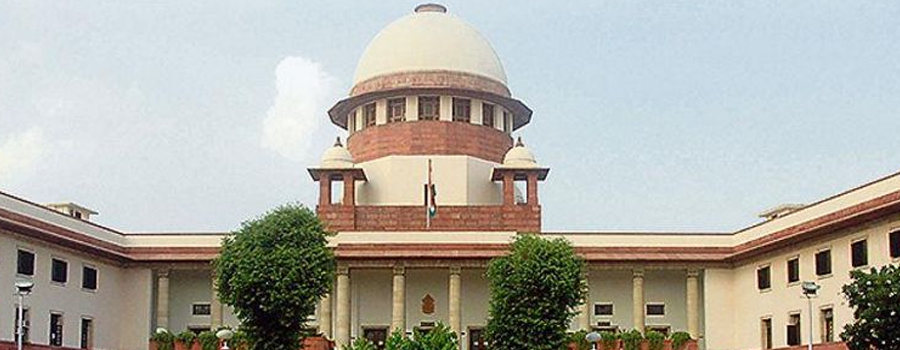
The Supreme Court (SC) held the decision of Maharashtra Governor, to call the then united Shiv Sena for proving majority by floor test, unjustified on the premise that the Governor did not have reasons, based on objective material, to reach to the conclusion that Shiv Sena has lost confidence of the House. The Governor had relied on a resolution passed by thirty-four Members of Legislative Assembly, of the Shiv Sena Party, stating their dissatisfaction with the functioning of the Government. However, the resolution was silent on their intention to withdraw their support or decision to exit from the Government and thus, insufficient for the Governor to call for floor test.
Sister’s name substituted for her brother’s on the waitlist for a government job on compassionate grounds

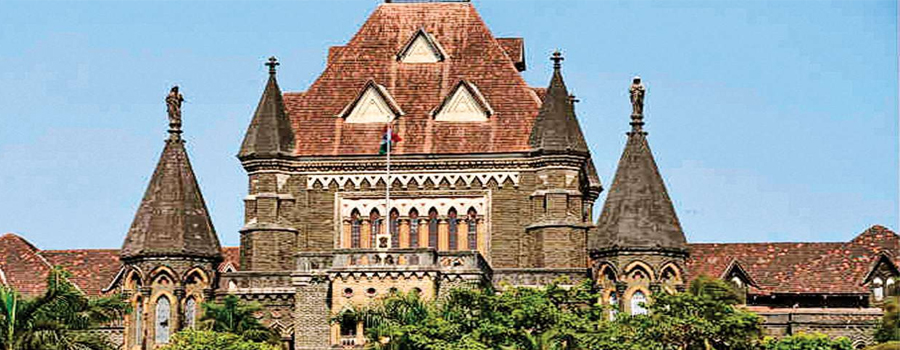
The Bombay High Court directs the Nashik Municipal Corporation to substitute the name of a sister with the name of her brother, with his consent, on a waitlist for a government job on compassionate grounds. A government resolution makes an exception for compassionate appointment only in the event of death; however, the Court held that was not a valid reason to refuse substitution of name of a candidate on the waitlist for a job when the brother has already secured another job.

Mandatory Reporting of Offences under POCSO Act to Override Section 198 of CrPC

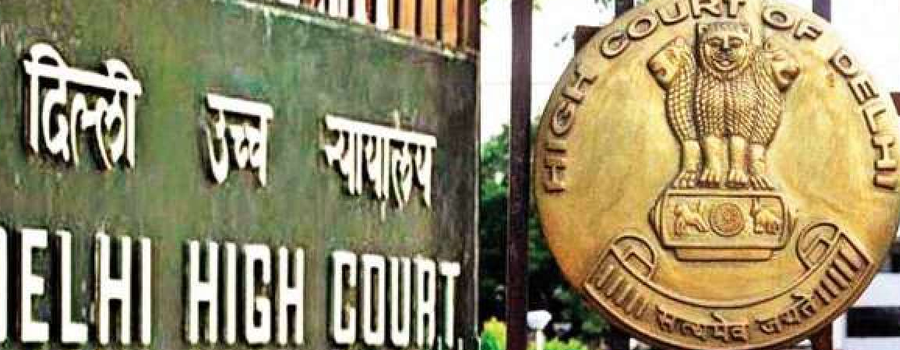
The Delhi High Court (DHC) allowed a writ petition seeking a declaration to the effect that “Section 19 read with Section 21 of the Protection of Children from Sexual Offences Act, 2012 (‘POCSO Act’) override the restrictions imposed under Section 198(1) read with Section 198(3) of the Code of Criminal Procedure, 1973 (‘CrPC’).” While the POSCO Act requires mandatory reporting by any person of any offence committed under the POCSO Act, Section 198 of the CrPC restricts the Court from taking cognizance of offences related to marriage unless the complaint is made by aggrieved person or a guardian of the minor or lunatic person only. Noting that marital status did not create distinct category within child victims of rape the DHC declared that the POCSO Act would override the general law; i.e. CrPC.

Absence of wisdom tooth – not conclusive evidence to establish victim/survivor age: Bombay HC

The Bombay High Court (Bombay HC) in an Appeal under the Prevention of Children from Sexual Offences Act, 2012 (POCSO Act) held that the victim’s age cannot be determined by solely relying on dental examination results. The Special POCSO Court, convicting the accused had relied on dental examination report and dentist’s testimony concluding absence of wisdom tooth, means the victim is a minor. The Bombay HC while setting aside the order noted that, wisdom tooth erupts between 17-25 years, thus age can be above 17 years but non-eruption does not conclusively prove the age is below 18 years. Further, medical test leaves an error margin of 2 years and that benefit of doubt with the age goes in favour of the accused, thus the prosecution has failed to prove its case.

Existence of dispute inter-se Respondent parties does not make the subject-matter non-arbitrable: Calcutta HC

The Calcutta High Court (CHC) has held that mere allegations of dispute inter-se respondents will not make an arbitration agreement ex-facie invalidated by fraud and does not result in subject matter being non-arbitrable. The CHC in the absence of clear evidence purporting that the arbitration agreement was not entered into by the Respondents, and existence of criminal proceedings held that this does not make the dispute non-arbitrable.

Bombay High Court directs early disposal of matters under the SARFAESI Act

The Bombay High Court, deciding writ petition seeking early disposal of matters under the Securitization and Reconstruction of Financial Assets and Enforcement of Security Interest Act, 2002 (‘SARFAESI Act’), directed, inter alia, that applications filed under Section 14 of the SARFAESI Act should be disposed by within 30 days from the date of filing of the application. The Court observed, “It is needless to stress the importance of expeditious disposal of the applications under section 14 of the SARFAESI Act, as the pendency of a large number of applications hinders the recovery of bad loans, which has a significant impact on the financial health of the country.”

No grant of default bail for chargesheet lacking sanction of authority

The Supreme Court (‘SC’), while deciding appeals filed by accused charged with offences under the Indian Penal Code, 1860 and Unlawful Activities (Prevention) Act, 1967, held that an accused is not entitled to default bail under Section 167(2) of the Code of Criminal Procedure, 1973 (‘CrPC’), on the ground that the chargesheet, even though filed within the time limit as prescribed under Section 167(2) of CrPC, did not have a valid order of sanction by a competent authority. Dismissing the appeals, the SC reiterated that the grant of sanction is not contemplated under Section 167 of the CrPC.