


Safe Harbour principle not applicable to e-commerce websites as a defence from IP infringement cases: DHC

The Delhi High Court (DHC), while dealing with a suit for permanent injunction filed by Puma SE (Puma) against Indiamart Intermesh Ltd. (IndiaMart) from allowing third-party sellers to sell counterfeit Puma goods on IndiaMart’s website, has held that by allowing prospective sellers to select trademarks of Puma while registering themselves on IndiaMart’s websites, without any verification, IndiaMart “…aided commission of the unlawful act of counterfeiting…” and thus, IndiaMart cannot claim the benefit of “safe harbour principle” given under section 79 of the Information Technology Act, 2000. The DHC further restrained IndiaMart from providing any of the registered trademarks of Puma to prospective sellers while applying for registration in IndiaMart’s website.
No right to claim sett-off in Corporate Insolvency Resolution Process: SC

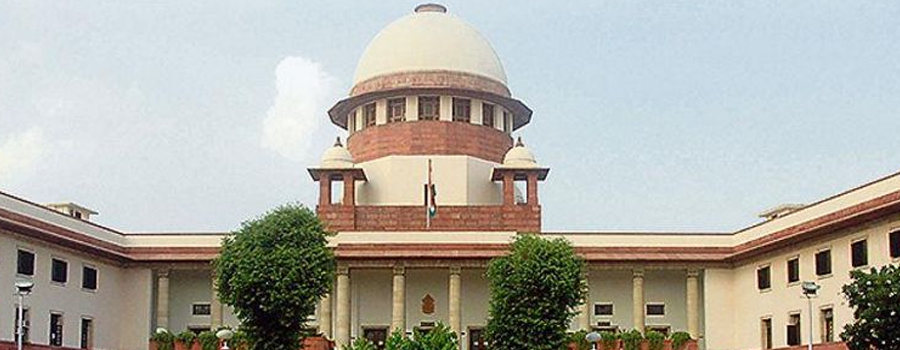
The Supreme Court (SC), while dealing with issue of permissibility of mutual set-off of claims under the Corporate Insolvency Resolution Process (CIRP) has held that, the set-off of the dues payable by the Corporate Debtor for a period prior to the commencement of the CIRP cannot be made & is not permitted in law from the dues payable to the Corporate Debtor post the commencement of the CIRP, thus, no statutory set-off or insolvency set-off can be applicable in CIRP under Part II of the Insolvency & Bankruptcy Code, 2016.

Petition under Art.136 cannot be resorted to in order to circumvent limitation period: SC

The Supreme Court (SC) while dismissing a Special Leave Petition (SLP) filed against the order of the National Company Law Appellate Tribunal, Chennai, has held that, parties cannot take the recourse of SLP to circumvent the bar of limitation, especially, when a statutory appeal lies in the case. The SC by taking note that, the assailed order was appealable under Section 62 of the Insolvency & Bankruptcy Code, 2016, dismissed the SLP.

Right to parenthood and procreation is fundamental right of a convict: DHC

The Delhi High Court (DHC), while dealing with the issue of grant of parole for a convict on the premise of right to procreation, went on to hold that right to procreation and parenthood “is a fundamental right of a convict protected under Article 21 of the Constitution”. The DHC further clarified that this right is not an absolute right, but depends on the facts and circumstances of each case and upon the consideration of “factors such as the prisoner’s parental status and age, a fair and just approach must be adopted to preserve the delicate equilibrium between individual rights and broader societal considerations.”

Legal heirs cannot be excluded from claiming securities against nominee due to the Non-Obstante clause: SC

The Supreme Court (SC) ruled that the legal heirs’ legitimate claim to the securities, against the nominee, is not precluded by the non-obstante clause under Section 109A(3) of the Companies Act, 1956 and bye-law 9.11.7 of the Depositories Act, 1996 and opined that the vesting of securities in favour of the nominee “is for a limited purpose”, that is, to avoid confusion with regard to the legal formalities required to be undertaken upon the death of a shareholder. The SC further held that, succession laws cannot be overridden by the nomination process under the Companies Act, 1956 (pari materia Companies Act, 2013).

Google to pay $700 million in antitrust settlement with US states

Google has entered into a settlement agreement with the US States and has agreed to pay US$700 million & to allow for greater competition in its app store – PlayStore. It has been alleged by plaintiff States, in the lawsuit, that Google has been exploiting its dominance in the PlayStore by overcharging consumers through unlawful restrictions on the distribution of apps on Android devices and unnecessary fees for in-app transactions. As a part of the settlement agreement, Google will simplify Android user’s ability to download apps directly from the developers.

ACCC fined Airbnb for misleading consumers about the currency of the prices on its platform

The Australian Competition & Consumer Commission (ACCC), has directed Airbnb Ireland UC (Airbnb) to pay $30 million ($15 million as penalty & $15 million as compensation to the affected consumers) for misleading its consumers about the currency of the prices on its accommodation platform. The ACCC noted that between 2018 & 2021, Airbnb made false or misleading representations that the prices on its accommodation platform were in Australian dollars, when in fact for about 70,000 consumers the prices were in US dollars. The ACCC further held that, by paying in US dollars, the affected consumers were charged more than what they expected to pay, and were deprived of a chance to make an informed decision.

Autorité de la concurrence fines Rolex for prohibiting retailers from selling watches online

The French Competition Authority – Autorité de la concurrence (ALC), has imposed a fine of €91,600,000 on Rolex France SAS (Rolex) for engaging in an anti-competitive vertical agreement, with its authorised retailers, by prohibiting them from selling Rolex watches online for more than ten years. According to the ALC, the defence provided by Rolex that the measure has been undertaken by them to combat counterfeiting and parallel trade, was insufficient considering that Rolex’s competitor facing similar risks authorise online selling of their products.

When no limitation period prescribed, then Appeal must be filed within reasonable time: SC

The Supreme Court (SC), while dealing with the issue limitation period for filling an appeal, when no such period has been prescribed, has held that, “…where no limitation stands provided either by specific applicability of the Limitation Act or the special statute governing the dispute, the Court must undertake a holistic assessment of the facts and circumstances of the case to examine the possibility of delay causing prejudice to a party.” The SC further held that, the court’s examination must include the facts and circumstances of the case, conduct of the parties, nature of the proceeding, length of delay, possibility of prejudice being caused, and the scheme of the statute in question, while considering the limitation period and condonation of delay application, if any.

Two Women’s Reservation Bill receives imprimatur of the Lok Sabha

The Lok Sabha has passed The Jammu and Kashmir Reorganisation (Second Amendment) Bill, 2023 and the Government of Union Territories (Amendment) Bill, 2023 providing for reservation of one-third of all elected seats, for women, in the Jammu & Kashmir Legislative Assembly and in the Puducherry Legislative Assembly, respectively. Reservation for women in these Bills would also extend to the seats earmarked for members of SC & ST communities.