



Signed-blank cheque will be presumed to be issued for discharge of debt, unless proven otherwise: Ker. HC

The Kerala High Court (Ker. HC), dealing with the issue of whether the drawer of a signed-blank cheque, given as security cheque, can be prosecuted under Section 138 of the Negotiable Instruments Act, 1888 (N.I. Act), has held that the presumption under Section 139 of the N.I Act, that the cheque was issued in discharge of debt will be applicable even to a voluntarily issued blank cheque. The Ker. HC further held that even if the cheque was given as a blank one, by affixing his signature, the drawer cannot disown the cheque, unless contradicted by evidence showing that it was handed over under any threat or coercion.
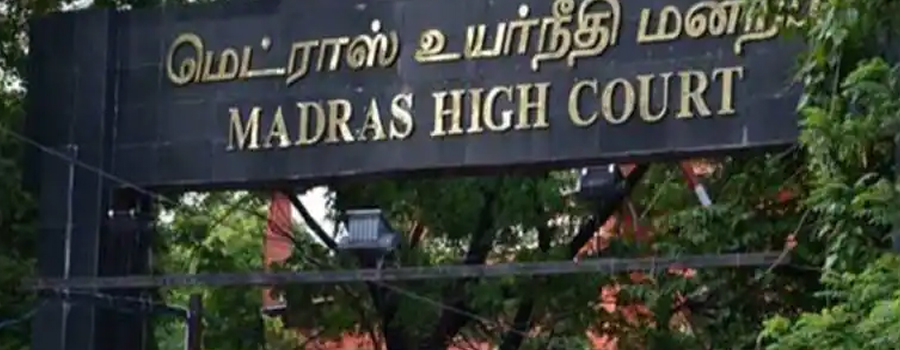

TN Online Gambling Act can be used to ban only games of chance: Mad. HC

The Madras High Court, while upholding the constitutional validity of Tamil Nadu Prohibition of Online Gambling and Regulation of Online Games Act, 2022 (TN Online Gambling Act), has held that while the State government is free to make rules to restrict the time one spend playing online games or to set age limits for both games of chance & of skill, it can only ban games of chance & not games of skill such as Rummy & Poker.

Certificate u/s 65B Evidence Act can be submitted at any stage of the trial: SC

The Supreme Court (SC), dealing with the issue of whether certificate u/s 65B Evidence Act, 1872 (Evidence Act) can be accepted at a later stage in the trial, has reiterated that certificate u/s 65B of the Evidence Act can be produced at any stage if the trial is not over. The SC took note of the fact that both the Trial Court as well as the Karnataka High Court has erred by not allowing the application filed u/s 311 Cr.P.C. for recalling prosecution witness & to take certificate u/s 65B.

Agreement to sell is not a conveyance deed: SC

The Supreme Court (SC), while dealing with the issue of whether an agreement to sell an immoveable property can be said to be barred under Karnataka Prevention of Fragmentation and Consolidation of Holdings Act, 1996 (1996 Act), has held that,“…Agreement to Sell is not a conveyance; it does not transfer ownership rights or confers any title.” The SC took note of the fact that Section 5 of the 1996 Act, only barred lease/sale/conveyance or transfer of rights and, therefore, held that the agreement to sell was not barred under the 1996 Act. However, since the consideration amount was already paid & the possession was handed over to the transferee, the property was considered to be duly transferred to the transferee.

Proprietary rights arise from the distinctive colour scheme & getup: Mad. HC

The Madras High Court (Mad. HC), while dealing with the issue of whether ITC Ltd. (ITC), by selling its Butter cookies in blue packaging, similar to that being sold by Britannia Industries (Britannia), has infringed proprietary rights of the latter, has held that, the trademark & the trade dress get distinctiveness in the combination of the colour scheme & getup which gives rise to the proprietary right of the exclusive use to Britannia. Mad. HC further opined that Britannia is the prior user of the colour scheme & in the absence of any reasonable justification being provided by ITC as to why it chose to change its packaging colour from red to blue, only for Southern India, restrained ITC from selling its Butter cookies in similar trade dress.

MoIB issues draft Broadcasting Services (Regulation) Bill, 2023

The Ministry of Information & Broadcasting (MoIB) has issued draft Broadcasting Services (Regulation) Bill, 2023 which aims to consolidate framework to regulate the broadcasting services in the country & seeks to replace the existing Cable Television Networks (Regulation) Act, 1995 & other policy guidelines currently governing the broadcasting sector in India. It also proposed constitution of Content Evaluation Committees & a Broadcast Advisory Council for self-regulation & separate program and advertisement code for different Broadcasting Network Operators.

Airlines bound by the time schedule as promised by its courier agents: SC

The Supreme Court (SC), while dealing with the issue of whether Airline can be held liable for failing to fulfil the delivery date as promised by its courier agents, has held that “once the agent has issued a time schedule for delivery of consignment, it cannot be said that there is no material indicating that there was no agreement for delivery of the consignment in time.” The SC, while granting relief to the consumer, noted in the absence of any evidence supporting that the courier agent had no authority to give schedule of delivery of consignment the onus has not been discharged by the Airlines.

Not necessary that all IPR suits are valued above Rs. 3 lakhs for calling in the jurisdiction of Commercial Courts: DHC

The Delhi High Court (DHC), dealing with the issue whether all IPR suits must be valued at or above Rs. 3 Lakhs to attract the jurisdiction of Commercial Courts situated in Delhi, has held that the jurisdiction of Commercial Court, under Commercial Courts Act, 2015 (CCA), would be attracted only if the suit involves a commercial dispute and when specified value of the suit exceeds Rs. 3 Lakhs. The DHC further overruled its earlier judgment in the Vishal Pipes case wherein it was held that all IPR suits ought to be valued at Rs. 3 lakhs & above and must be placed before the Commercial Courts.

‘Complaints Committee’ inquiring into sexual harassment complaints empowered to question witnesses: SC

The Supreme Court (SC), dealing with the issue of whether the Central Complaints Committee (CCC), constituted to inquire into cases of sexual harassment at workplace, could have put questions to the prosecution witnesses in a departmental inquiry, has held that since the CCC, acting as per Vishaka Guidelines, is deemed to be the Inquiry Authority, therefore, the CCC must be allowed to put questions to the witnesses. The SC further, opined that neither there is any statutory bar nor any logic to restrict the power of the CCC to put questions to the witnesses.

Arbitrariness in arbitration agreement can be scrutinized by Referral Court under Section 11(6) A&C Act, 1996: SC

The Supreme Court (SC), dealing with the issue of whether a condition precedent of pre-deposit for initiation of arbitration is violative of Art. 14 of the Constitution & whether this arbitrariness can be looked into by the Referral Court under Section 11(6) of the Arbitration & Conciliation Act, 1996 (A&C Act), has held that “for an arbitration clause to be legally binding it has to be in consonance with the “operation of law” which includes the Grundnorm i.e. the Constitution.” Therefore, even if a party has consented to the pre-deposit clause at the time of execution of the agreement Referral Court is empowered, while acting under Section 11(6) of the A&C Act, to test the arbitration agreement on the ground of arbitrariness under Art.14.