

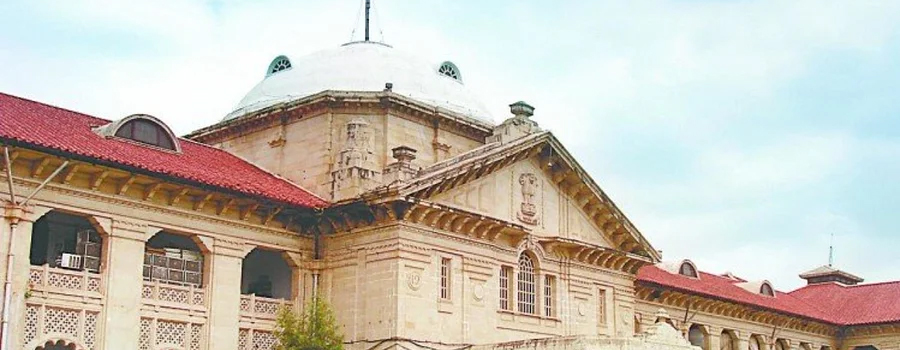
Proceedings under POCSO Act cannot be Quashed on Compromise: AHC

The Allahabad High Court (‘AHC’) rejected an application filed for quashing the proceedings under Protection of Children from Sexual Offence Act, 2012 (‘Act’), after the mother of the victim and the accused came to a compromise, stating the victims of the Act cannot come to a compromise as if it is a compoundable offence or a civil cause. The AHC further said “An offence of rape or one under Section 7/8 of the Act of 2012 is an offence against the society, the truth of which has to be established before a Court of competent jurisdiction on the basis of whatever evidence is led at the trial.

BCI Authorizes Foreign Lawyers & Foreign Law Firms to Practice in India

The Bar Council of India (‘BCI’), have introduced the “Bar Council of India Rules for Registration and Regulation of Foreign Lawyers and Foreign Law Firms in India, 2022 (Rules)”. These rules authorize foreign lawyers and foreign law firms to register and practice in India on the principle of reciprocity. The areas of practice for these foreign firms and lawyers will be determined by BCI. The BCI also have the option of consulting the Ministry of Law and Justice to determine the areas of practice.

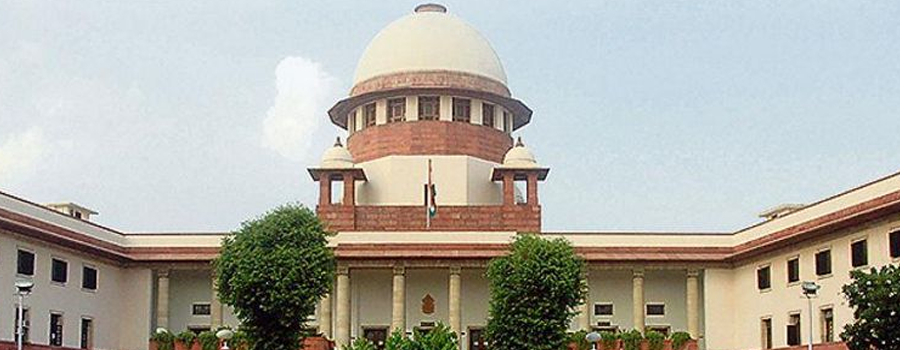
Conviction Based on Oral Testimonies Provided by Interested Parties Not Sustainable: Supreme Court

The Supreme Court (‘SC’) stating “in case of …. evidence which is partly reliable and partly unreliable….. the court is required to be circumspect and separate the chaff from the grain, and seek further corroboration from reliable testimony, direct or circumstantial” acquitted the appellants, accused under Sec. 302 of Indian Penal Code, 1860. The SC held that the appellants are entitled to the benefit of the doubt because the delay in filing the First Information Report (‘FIR’) couldn’t be explained.

Petition for Legal Recognition of Same-Sex Marriage Referred to the Constitution Bench: SC

In the matter before the Supreme Court (‘SC’), seeking legal recognition for same-sex marriages, the Central Government, stating that a marriage ultimately requires a union between two persons of the opposite sex, opposed providing legal recognition to same-sex marriage as it would have ramifications on other rights such as adoption etc. Therefore, this being a matter of policy, should be decided after obtaining opinions from people in the society by the legislature.

However, the 3-Judge bench of the SC observing: “We are of the view that it would be appropriate if the issues raised are resolved by the bench of five judges of this court with due regard to Article 145 (3) of the Constitution“, referred it to a constitutional bench.

Supreme Court Orders for Removal of “Masjid High Court” from Allahabad High Court Premises

Upholding the decision of the Allahabad High Court (‘AHC’) to remove the “Masjid High Court” from its premises, the Hon’ble Supreme Court (‘SC’) held that the mosque is present on government land on lease, canceled in 2002 and returned to the AHC for expansion purposes in 2004. The SC gave three months for execution of its order failing which the authorities of AHC were to take appropriate steps for removal or demolition.

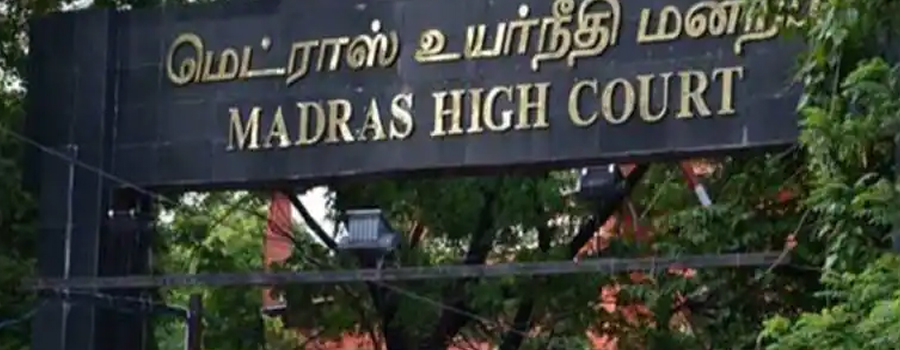
Madras High Court Quashes Government Orders Passed by Deputy Commissioner Ultravires of His Powers

The Madras High Court (‘MHC’), holding that mixing the duties of police and judiciary could lead to executive anarchy, quashed two Governments Orders (‘GOs’) vesting powers of an Executive Magistrate in the Deputy Commissioner of Police. The MHC, referring to a Supreme Court judgment, saying that only a Judicial Magistrate has the power to deal with the violation of bond executed under Sec.110 of Criminal Procedure Code, 1973 (‘CrPC’) and not an Executive Magistrate, held “The GO’s are consequently violative of Articles 14, 21 and 50 of the Constitution of India and the proviso to Section 6 of the Madras District Police.