


Department of Justice (‘DOJ’), US, has decided to continue its antitrust case against Google and abandon the divestment plan proposed to Google to divest from artificial intelligence firms including Anthropic, a competitor of OpenAI.

Strategic Consultant
Department of Justice (‘DOJ’), US, has decided to continue its antitrust case against Google and abandon the divestment plan proposed to Google to divest from artificial intelligence firms including Anthropic, a competitor of OpenAI.
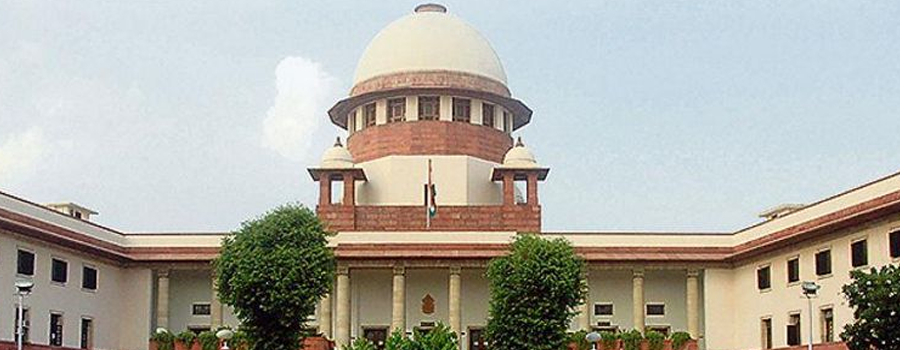
In a dispute for the use of Burger King Trademark, by a local eatery in Pune, the Supreme Court stayed the Bombay High Court order and allowed the Pune eatery to use the name ‘Burger King’ until the matter is decided by the Bombay High Court. The matter originated from the 2024 decision of a Pune district court, where the court ruled in favour of the local eatery, named Burger King, citing “prior and honest use”. [Anahita Irani v. Burger King]

Emphasising that Prevention of Money Laundering Act, 2002 (‘PMLA’) and Insolvency and Bankruptcy Code, 2016 serves distinct purposes, the National Company Law Tribunal (‘NCLT’) held that it does not carry the jurisdiction to direct the Enforcement Directorate (‘ED’) to de-freeze an account that was frozen under PMLA. The case pertained to the Corporate Insolvency Resolution Process of a Company involved in a money laundering case. The ED froze the bank account of the Company during the investigation. Subsequently the RP approached NCLT to direct the ED to de-freeze the accounts of the Company as it was being used to pay the resolution process costs.
The All India Consumer Products Distributors Federation (‘AICPDF’) has filed an anti-trust complaint, with the Competition Commission of India (‘CCI’), against major Quick-Delivery Giants, including Zomato’s Blinkit, Swiggy’s Instamart and Zepto. The complaint has raised concerns of predatory pricing and deep discounting practices, and has urged the CCI to look into the business practices of these platforms.
The investigation pursuant to the $1 billion deal between Microsoft and OpenAI was dropped by the Britain’s Competition and Markets Authority (‘CMA’), noting that Microsoft does not exercise the level of control over OpenAI that would require any scrutiny. The decision comes after CMA observed that while Microsoft has acquired “material influence” over OpenAI, it has not gained “de facto control” over it and therefore, the partnership does not meet the requirement for review under UK’s merger control regulations.

Dunlop Sports Korea (‘Dunlop’), an exclusive importer and distributor of products used in golf and tennis, was fined by the South Korea’s Fair Trade Commission (‘KFTC’) to the tune of $1.29 Million (USD) for engaging in illegal practices, like unlawfully enforcing resale price maintenance, which restricted competition in the retail market. It was noted that Dunlop implemented minimum prices for its products and retailers who disregarded these pricing policies were faced with penalties such as supply restrictions and termination of agreements.

The Ninth Circuit Court of Appeals, US (‘9th Circuit Court’) upheld the decision of U.S. District Court, Western District of Washington (‘District Court’), against the Real Estate Exchange Incorporation, Delaware (‘REX’), in a case pertaining to deceptive practices related to Multiple Listing Service (‘MLS’) and non-MLS listing by Zillow Group Incorporation (‘Zillow’) and National Association of Realtors (‘NAR’). MLS listings is database of properties that allow real estate brokers and agents to communicate property information with other professionals. The 9th Circuit Court, concurring with the District Court’s decision, stated that the no-commingling rule did not amount to combined effort for anti-competitive conduct.
Competition Commission of India (‘CCI’/ ‘Commission’) has dismissed an antitrust complaint against Microsoft, which alleged that the tech company is engaged in bundling practices by tying its antivirus software, Microsoft Defender, with its Windows operating system. The ruling, after considering multiple factors like unfair conditions, barriers to technical development, etc., observed that Microsoft does not compel users to use Defender, given that users retain the ability to install and use third-party antivirus solutions.

California based, health-care provider, Sutter Health reached a settlement in antitrust lawsuit, accusing the health-care provider of using its market dominance to compel insurers into accepting “all or nothing” contracts, thereby inflating health-care costs. The settlement came prior to a scheduled re-trial over claims that Sutter Health charged excessive prices and imposed restrictive contracts on insurers. Plaintiffs had sought $1.2 billion in damages during the initial trial.

U.S. District Court for Northern District of California, ruled in favour of Apple Inc. in a legal battle concerning allegations that Apple unlawfully tied its iCloud Storage services to its mobile devices. The District Court observed that no Apple device user is required to purchase iCloud or any cloud storage services and that it allows third-party services for photo and video storage, though it limits backup options for restricted data files needed for device restoration.


The rules of the Bar Council of India prohibit law firms from soliciting work or advertising in any manner. By clicking on 'I AGREE', the user acknowledges that The information provided in the website does not amount to advertisement and the user merely wishes to gain more information about KK Sharma Law Offices, its practice areas and its attorneys, for his/ her own information and use;
The information is made available/ provided to the user only on his/ her specific request and any information obtained or material downloaded from this website is completely at the user's volition and any transmission, receipt or use of this site is not intended to, and will not, create any lawyer-client relationship; and none of the information contained on the website is in the nature of a legal opinion or otherwise amounts to any legal advice. Thus KK Sharma Law Offices will not be liable for any consequence of any action taken by the user relying on material/ information provided under this website.
Having got one of the global automobiles giants imposed with a fine of Rs. 87 crores amongst other instances, our grip on this sector is complete. KK Sharma Law Offices ('Firm') has dealt with the procurement of services of Car Carrier Trucks by market leader in automobile sector in India and brought the anti-competitive practices to the fore.
The very first investigation in the country into competition law violations was made which resulted in a cascading effect of company after company giving up the claims of loan foreclosure charges in home and car loans across the country, amongst others, were under taken.
When the allegations of cartel were brought before the enforcement machinery against the flexible conveyor belt manufacturers they were clear in their mind that only KKSLO can deal it successfully and, accordingly, they availed our services.
The very first successful instance of cartelisation dealt by the competition agency in the case of Ficci Multiplex Association was very successfully dealt with by the competition agency under the overall supervision of Mr. Sharma.
The very first penalty on the leading stock exchange of the country exceeding Rs.50 Crores was based on the investigation done by the Mr. Sharma. Subsequently, when there were allegations of future trading and guar gum and other similar commodities, for saving the enterprises from huge fines, the Firm was the natural choice for representing these companies.
It may not be that well known no manufactured vehicle can leave the premises of the manufacturer except without being loaded on to the car carrier trucks. When the instances of anti competitive practices came to the fore, the Firm was the first choice to taken services from.