


Mandatory Reporting of Offences under POCSO Act to Override Section 198 of CrPC

The Delhi High Court (DHC) allowed a writ petition seeking a declaration to the effect that “Section 19 read with Section 21 of the Protection of Children from Sexual Offences Act, 2012 (‘POCSO Act’) override the restrictions imposed under Section 198(1) read with Section 198(3) of the Code of Criminal Procedure, 1973 (‘CrPC’).” While the POSCO Act requires mandatory reporting by any person of any offence committed under the POCSO Act, Section 198 of the CrPC restricts the Court from taking cognizance of offences related to marriage unless the complaint is made by aggrieved person or a guardian of the minor or lunatic person only. Noting that marital status did not create distinct category within child victims of rape the DHC declared that the POCSO Act would override the general law; i.e. CrPC.

Absence of wisdom tooth – not conclusive evidence to establish victim/survivor age: Bombay HC

The Bombay High Court (Bombay HC) in an Appeal under the Prevention of Children from Sexual Offences Act, 2012 (POCSO Act) held that the victim’s age cannot be determined by solely relying on dental examination results. The Special POCSO Court, convicting the accused had relied on dental examination report and dentist’s testimony concluding absence of wisdom tooth, means the victim is a minor. The Bombay HC while setting aside the order noted that, wisdom tooth erupts between 17-25 years, thus age can be above 17 years but non-eruption does not conclusively prove the age is below 18 years. Further, medical test leaves an error margin of 2 years and that benefit of doubt with the age goes in favour of the accused, thus the prosecution has failed to prove its case.

Existence of dispute inter-se Respondent parties does not make the subject-matter non-arbitrable: Calcutta HC

The Calcutta High Court (CHC) has held that mere allegations of dispute inter-se respondents will not make an arbitration agreement ex-facie invalidated by fraud and does not result in subject matter being non-arbitrable. The CHC in the absence of clear evidence purporting that the arbitration agreement was not entered into by the Respondents, and existence of criminal proceedings held that this does not make the dispute non-arbitrable.

Bombay High Court directs early disposal of matters under the SARFAESI Act

The Bombay High Court, deciding writ petition seeking early disposal of matters under the Securitization and Reconstruction of Financial Assets and Enforcement of Security Interest Act, 2002 (‘SARFAESI Act’), directed, inter alia, that applications filed under Section 14 of the SARFAESI Act should be disposed by within 30 days from the date of filing of the application. The Court observed, “It is needless to stress the importance of expeditious disposal of the applications under section 14 of the SARFAESI Act, as the pendency of a large number of applications hinders the recovery of bad loans, which has a significant impact on the financial health of the country.

No grant of default bail for chargesheet lacking sanction of authority

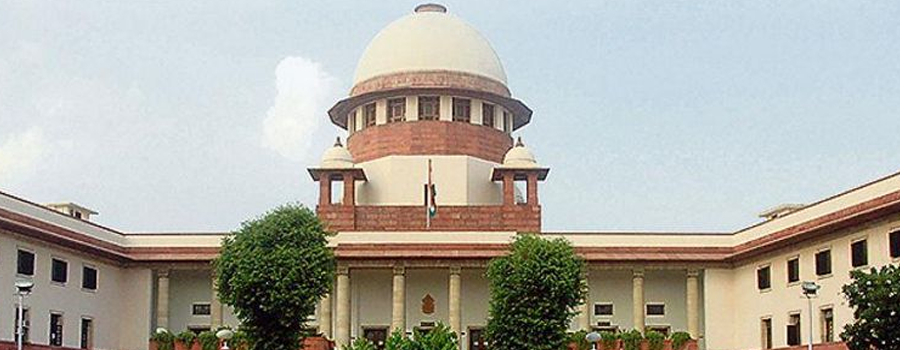
The Supreme Court (‘SC’), while deciding appeals filed by accused charged with offences under the Indian Penal Code, 1860 and Unlawful Activities (Prevention) Act, 1967, held that an accused is not entitled to default bail under Section 167(2) of the Code of Criminal Procedure, 1973 (‘CrPC’), on the ground that the chargesheet, even though filed within the time limit as prescribed under Section 167(2) of CrPC, did not have a valid order of sanction by a competent authority. Dismissing the appeals, the SC reiterated that the grant of sanction is not contemplated under Section 167 of the CrPC.

MHC awards free education and annual maintenance to child born after negligent tubuctomy procedure

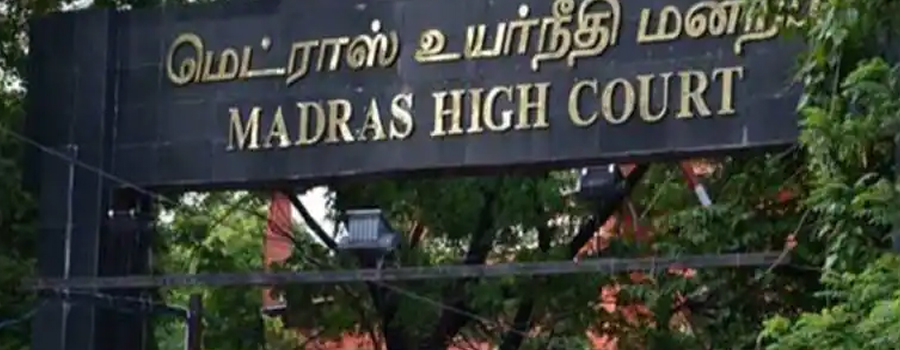
In a writ petition filed before the Madras High Court (‘MHC’), for compensation for medical negligence, the MHC awarded compensation of Rs. 3 lakh to the petitioner who became pregnant and gave birth despite undergoing Purperal Sterilization by Tubuctomy. The MHC also directed the State Government to provide free education to the child and pay annual maintenance of Rs. 1.2 lakh until the child turns 21 years old while stating that “The Medical Officers entrusted with the implementation of the Family Planning Programme cannot, by their negligent acts in not performing the complete sterilization operation, sabotage the scheme of national importance.