Person not named in F.I.R. can also be proceeded against during the trial: SC

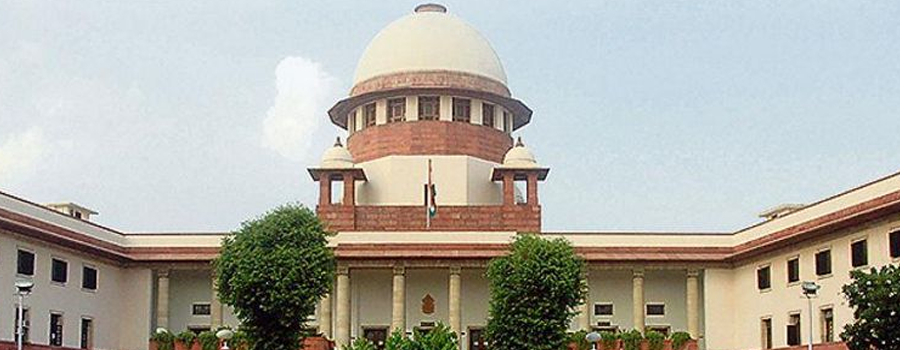
The Supreme Court (SC) has held that under Section 319 of Cr.P.C., 1973 a person not named in the F.I.R. can also be proceeded against during the trial if there is sufficient evidence of his involvement and upon satisfaction of the Court to such an extent that is more than prima facie, as formed at the stage of a charge being framed, and short of satisfaction to an extent that the evidence, if unrebutted, would lead to conviction.

Couple living in live-in relationship by mere agreement cannot seek divorce: Kerala HC

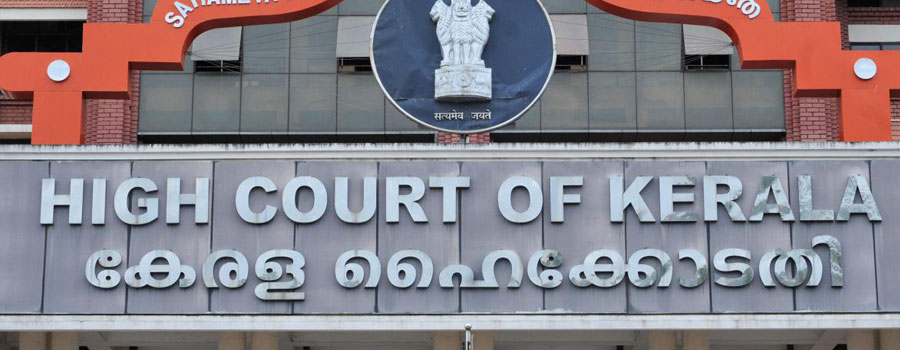
The Kerala High Court (Kerala HC), declining to hear a divorce petition in a live-in relationship case, held that if the parties decide to live together by virtue of an agreement, that by itself will not be recognised as a marriage and, therefore, cannot claim divorce. The Kerala HC stated that “the Law is yet to recognise the live-in relationship as marriage. The Law accords recognition only if the marriage is solemnised in accordance with the personal law or in accordance with secular law like the Special Marriage Act.

SC stays bike-taxi operations of Rapido & Uber in Delhi

The Supreme Court (SC), opining that licenses are required for the use of vehicles as transport vehicles under the scheme of the Motor Vehicles Act, 1988 and, further, that Motor Vehicle Aggregator Guidelines, 2020 issued by the Central Government can never override a statute, stayed the order passed by Delhi High Court (Delhi HC) allowing bike-taxi operations in Delhi. The Delhi HC had passed an order granting bike-taxi operators, like Rapido and Uber, to operate without aggregator licenses till Delhi Government notifies its policy for the same.

LOCs cannot be issued as a general norm by the bank for its loan defaulters: Calcutta HC

The Calcutta High Court (Calcutta HC) has held that merely because few loan defaulters have defrauded the banks and fled from India, the same cannot be used as a uniform rationale for banks to issue Look out Circulars (LOC) in every case. Apart from causing immediate and irrevocable violation of a person’s fundamental right of movement, LOC also have an inexplicably long shelf-life, as they can only be revoked at the instance of the originator. Thus, the Calcutta HC held that – “The only acceptable logic – albeit with some effort – is that a person may flee the country and not return to repay his/her outstanding loan. This, however, cannot be the rule across the board and a borrower’s credentials and circumstances for making payment must be taken into account.

No interim relief to Shemaroo in copyright infringement case against T-Series: Bombay HC

The Bombay High Court (Bombay HC) has refused to grant temporary injunction in a copyright infringement suit filed by Shemaroo Entertainment Ltd. against Super Cassettes Industries Ltd. (T-Series). The suit pertains to alleged copyright infringement by T-Series for publishing audio-visuals of film songs on T-Series’ YouTube channel over which Shemaroo holds copyright. However, Bombay HC refused to grant relief “As the plaintiff is found to have failed in making out a prima facie case in its favour, the aspects of grave and irreparable loss being suffered in the absence of temporary injunction and balance of convenience, pale into insignificance.

Hitachi-Thales’ GTS deal could lead to substantial lessening of competition: CMA

The Competition & Markets Authority (CMA), UK, in its provisional findings report related to the proposed acquisition of Thales’ Ground Transport Systems (GTS) by Hitachi Rail Ltd. (Hitachi) has concluded that the acquisition could lead to substantial lessening of competition in the supply of: i) digital mainline signalling systems in Great Britain & ii) communications-based train control signalling systems in the UK. Further, UK’s railway network is planned for due upgradation, and if, the merger is allowed, it could lead to fewer credible bidders in an already oligopolistic market, which could raise costs, negatively impact digitalisation of the network and likely to reduce competition.

BCI mandate for law degree from recognised/approved college for enrolment upheld by SC

The Supreme Court (SC) has held that the Bar Council of India (BCI) is vested with powers to prescribe requirements and qualification for advocate(s) seeking enrolment with State Bar Councils. Relying on the earlier Boonie Foi Law College case, which held that BCI’s role prior to enrolment cannot be ousted as per Section 49 r/w. Section 24(3)(d) of the Advocates Act, 1961, the SC was of the opinion that “ ..The rule framed by BCI requiring a candidate for enrolment as an Advocate to have completed his law course from a college recognized/ approved by BCI cannot be said to be invalid…

Mere possession and transportation of cows is not an offence under the UP Prevention of Cow Slaughter Act

The Allahabad High Court, while granting bail to an applicant accused of cow slaughter under the Uttar Pradesh Prevention of Cow Slaughter Act, 1955 (Act), observed that mere possession or transportation of a cow does not amount to an offence and also cannot, by itself, amount to abetting/attempting/committing an offence under the Act. There was no evidence of any physical injury on any cow or its progeny that endangered life and, therefore, the applicant was granted bail.