


TikTok fined for $345 million by Irish Data Protection Commission

The An Coimisinéir Cosanta Sonraí (Irish Data Protection Commission ‘IDPC’) fined TikTok Technology Limited (TikTok) $345 million for failing to comply with its obligations under EU’s General Data Protection Regulation (GDPR) in relation to its processing of personal data relating to child users on the TikTok platform. IDPC noted that during the period from 31st July 2020 – 31st December 2020, TikTok violated GDPR by making “public-by-default”, the content posted by children on its platform & for implementing ‘dark-patterns’ nudging users for a more privacy-intrusive settings.
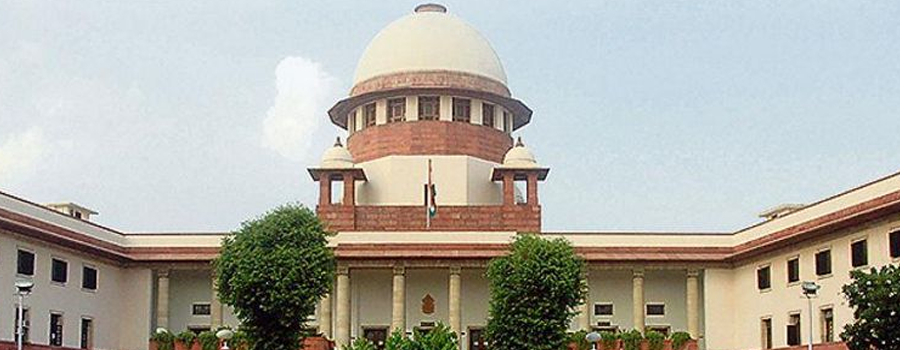

Volume of sales & advertisement expenses – significant factors in a suit for passing off: SC

The Supreme Court (SC), in an appeal filed by a manufacturer of country liquor for trademark infringement, through passing off, by another manufacturer, has held that in a suit for passing off “the volume of sale and the extent of advertisement made by the appellant of the product in question will be a relevant consideration for deciding whether the appellant had acquired a reputation or goodwill.” In present case, the Trial Court, noting conduct of “passing off” by the respondent, ruled in favour of appellant wherein the relief of permanent injunction was granted to the appellant; however, the Bombay High Court (BHC) stayed the execution of decree.

Appellate Court hearing appeals can condone the delay beyond the statutory period of 90 days: BHC

The Bombay High Court (BHC), dealing with the question of whether Appellate Court has the power to condone the delay beyond the statutory period of 90 days for filing an appeal under Section 21(5) of the National Investigation Agency Act, 2008 (NIA Act), has held that 2nd proviso of Section 21(5) of the NIA Act has to be interpreted so as to read ‘shall’ as ‘may’, and as such the provision is directory, therefore, vesting discretion in the Appellate Court to condone delay on sufficient cause being shown. Further, the BHC noted that if only on the prescribed statutory bar in the provision an Appeal is not heard, then, “the right of an accused, whose personal liberty stands curtailed by a judgment/sentence/order passed by the Special Court, would stand seriously jeopardized.”

When no time fixed in specific performance contracts, limitation runs from period when plaintiff had notice of refusal: SC

The Supreme Court (SC), dealing with the issue of period of limitation w.r.t. a specific performance suit, has held that as per Article 54 of Part II of the Schedule to the Limitation Act, 1963 the limitation period for filing a suit for specific performance is 3 years from the date fixed for performance. Further, the SC noted that the second part of the said Article 54 stipulates that “…when no time is fixed for performance, the court will have to determine the date on which the plaintiff had notice of refusal on part of the defendant to perform the contract.

Principle of ‘comity of courts’ cannot override the right of access to justice of a litigant: BHC

The Bombay High Court (BHC), in an anti-enforcement action suit filed against the anti-suit permanent injunction order passed by the High Court of Singapore (HCS), has held that “The principle of comity of Courts …. cannot override the aforesaid valuable right of a litigant to access of justice, particularly when … an anti-suit injunction, is issued by a foreign Court having the effect of interference with or preventing the plaintiff from pursuing the only legal remedy available…” The suit was filed by co-founder of People Interactive (India) Pvt. Ltd. (shaadi.com) seeking stay from enforcement of the anti-suit order passed by the HCS. The appellant contended that respondent’s actions amounted to oppression & mismanagement and thereby sought to approach NLCT; however, appellant was restrained through the order of SHC.

30 days limitation period for filling appeal against Family Court orders: DHC

The Delhi High Court (DHC) in a recent ruling expounded on the inconsistency between limitation period for filing appeal under Hindu Marriage Act, 1955 (HMA) vis-à-vis Family Courts Act, 1984 (FCA). The limitation period prescribed under the HMA is 90 days; however under the FCA it is only 30 days. Clarifying the issue the DHC propounded that the period of limitation for filing an appeal from an appealable order and decree of a District Court would be as under section 28 of HMA – 90 days, whereas wherever there are Family Courts in the territory, the same would be governed under section 19 of FCA thus, the limitation period of 30 days will be applicable.

No jurisdiction of State Bar Council to issue binding directions on Bar Associations to grant membership: All. HC

The Allahabad High Court (All. HC), dismissing a writ petition filed for issue of mandamus directing Kanpur Bar Association to comply with order passed by the State Bar Council’s (SBC) Vice-Chairman for addition of petitioners’ names to the Association’s electoral list, has held that there is no statutory duty casted on SBC to issue any direction to an independent Bar Association to revive/renew the registration or membership to any individual. Further, the All. HC noted that powers vested with SBC are w.r.t. protecting the interests, rights & privileges of advocates, as a body of individuals; & not individual interests.

Spouse highly qualified & earning – not entitled to maintenance under Section 24 HMA: DHC

The Delhi High Court (DHC), in an appeal challenging the order of a Family Court rejecting grant of maintenance to wife, has held that a spouse being highly qualified & of earning capacity having a source of income disentitles the spouse from claiming maintenance. The DHC relied on Madhya Pradesh High Court’s judgement where it interpreted Section 24 of Hindu Marriage Act, 1955 and observed that “Section 24 of HMA is not meant to create an Army of idle people waiting for a dole to be awarded by the other spouse.”

Mere fact that CoC-approved Resolution Plan has not got accent of Adjudicating Authority does not imply that claims can be accepted belatedly: SC

The Supreme Court, in an appeal dealing with acceptance of claim by Resolution Professional submitted by a Creditor against Corporate Debtor after approval of the Resolution Plan (RP) by Committee of Creditors (CoC), has held that “mere fact that the Adjudicating Authority has yet not approved the plan does not imply that the plan can go back and forth, thereby making the CIRP an endless process.” Further, the SC held that I&B Code, 2016 is time bound process and the Courts are cautioned against allowing claims after RP has been approved by CoC.